
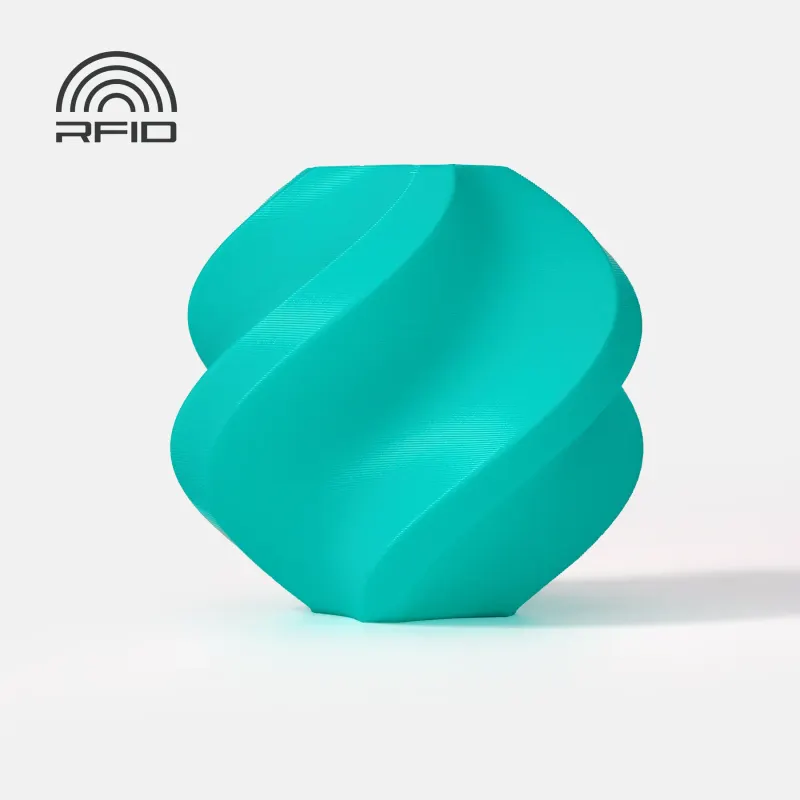
Bambu Lab ASA Green
Product details
- Brand:
- Bambu Lab
- Category:
- Filament
Product description
Bambu ASA
Bambu ASA is a highly durable material that offers exceptional resistance to UV radiation, weathering, mechanical stress, and high temperatures. Thanks to the unique combination of these properties, it is ideal for printing outdoor models (e.g., garden labels, mailboxes, weather vanes) and engineering parts that must withstand demanding outdoor conditions over the long term.
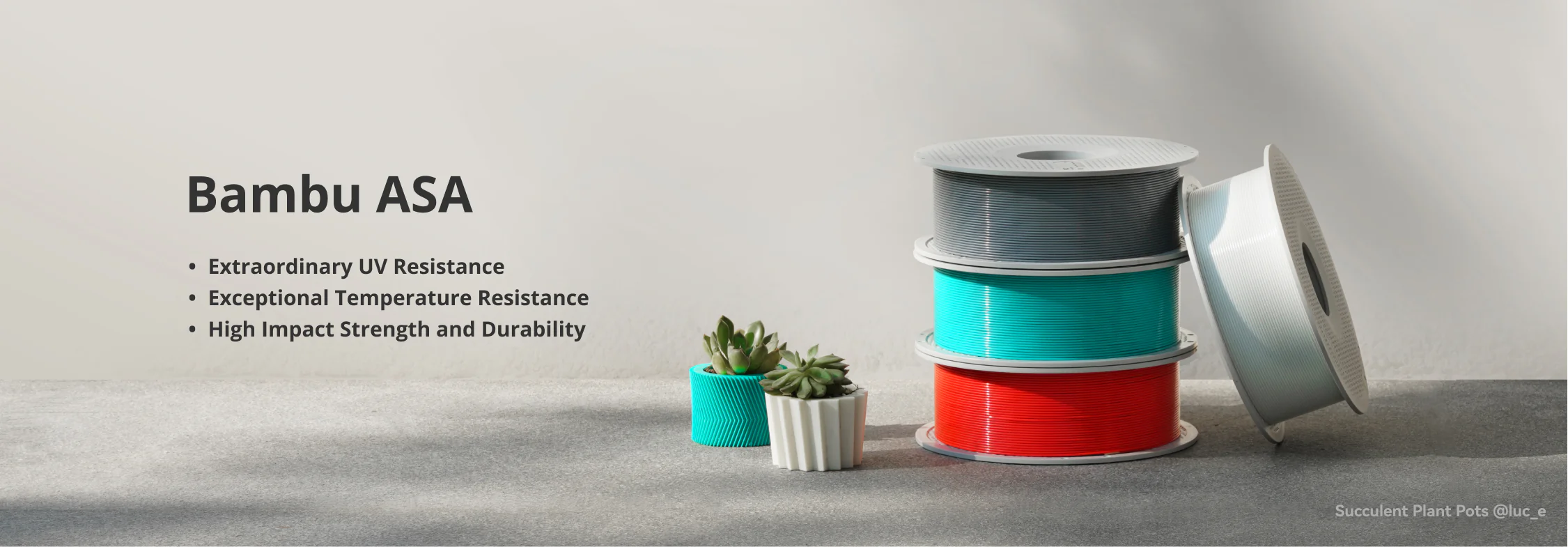
Exceptional resistance to weather and UV
Bambu ASA offers outstanding resistance to UV radiation, oxidation, and aging, providing effective protection against cracking and color fading during long-term outdoor use.
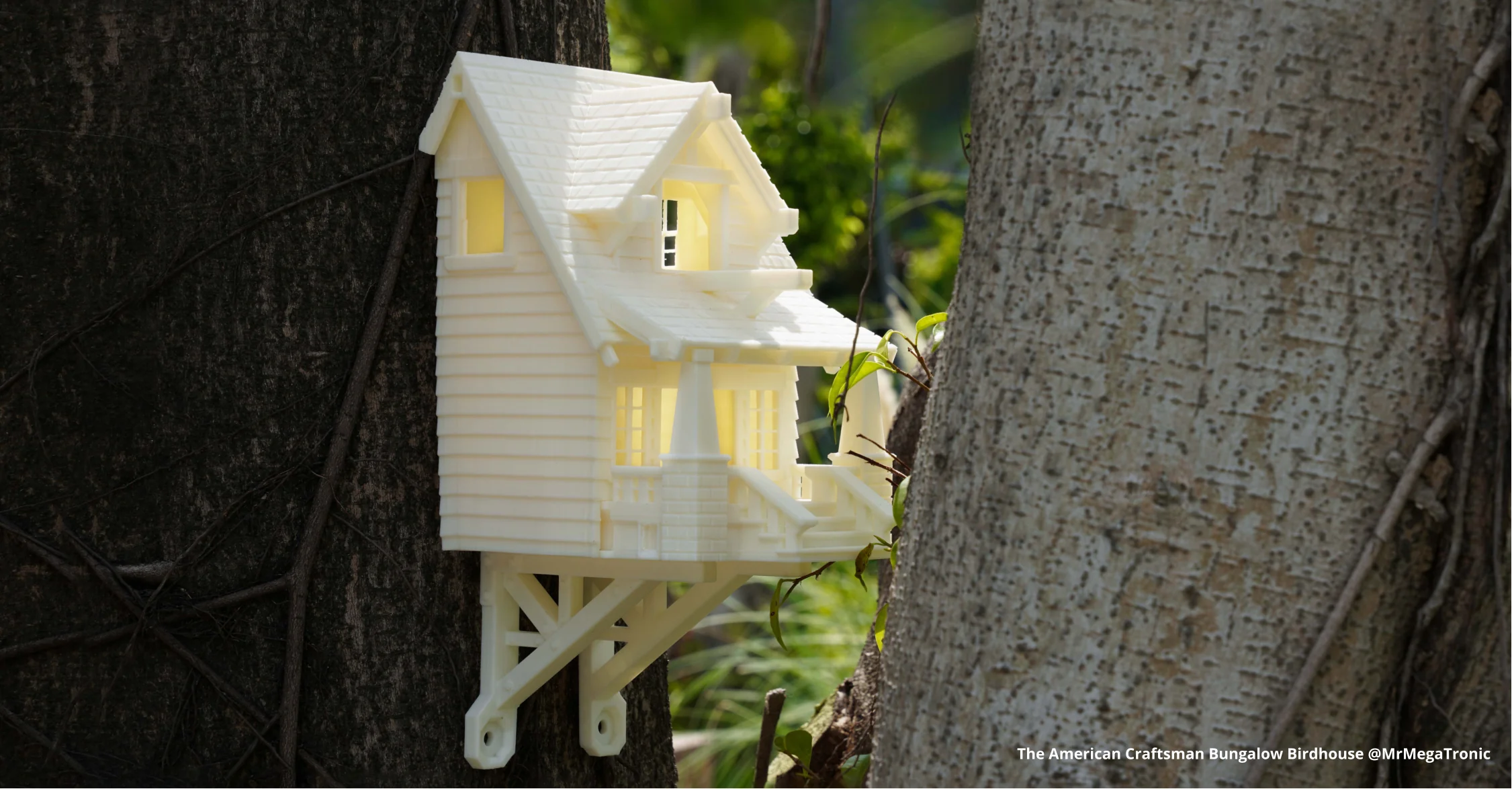
Strength and durability
Thanks to its toughness and high impact strength, it is suitable for outdoor applications as well as common engineering requirements.
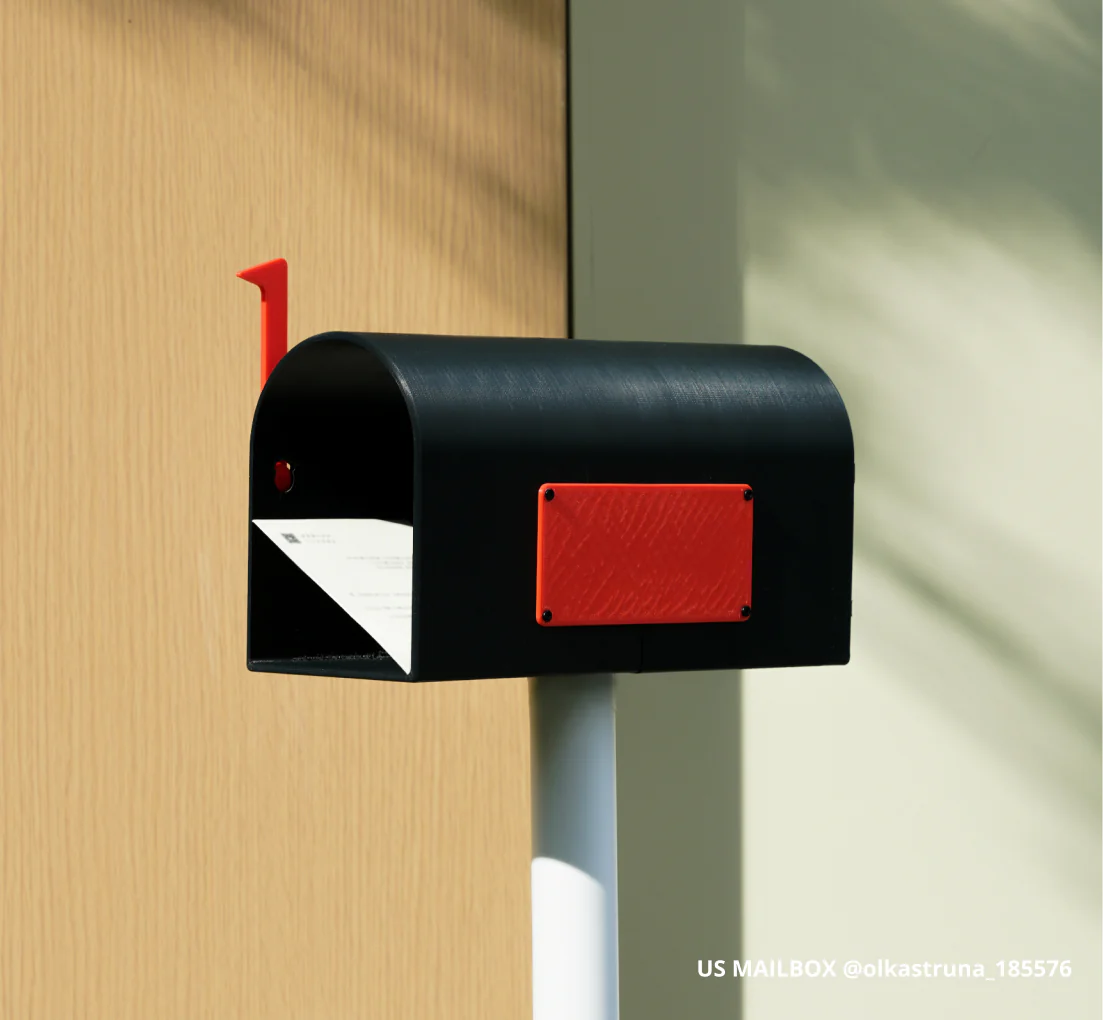
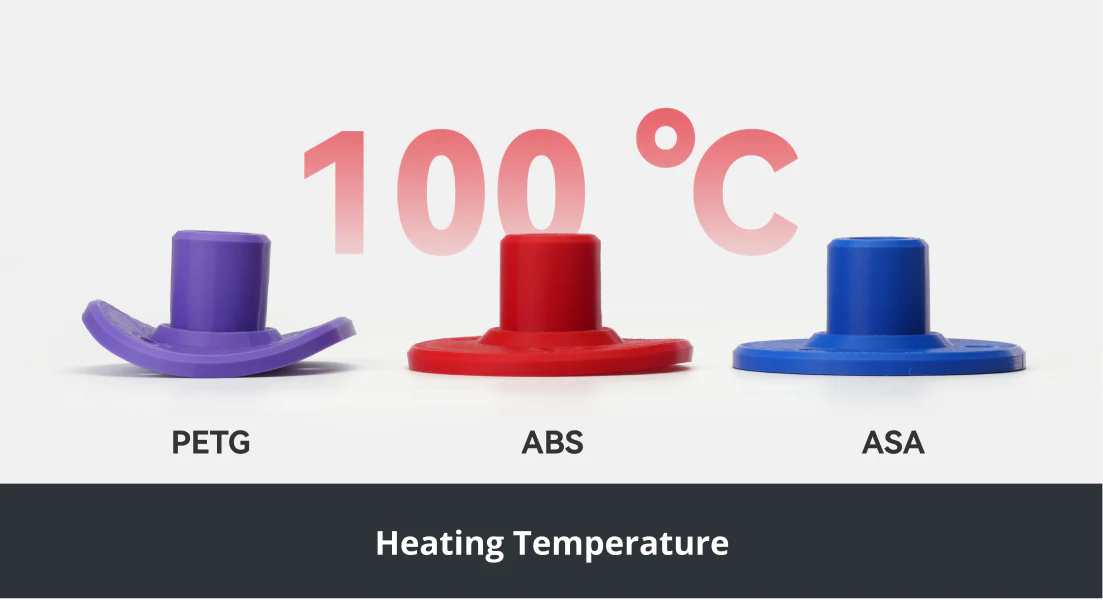
Better heat resistance
Compared to standard PETG or ABS, Bambu ASA maintains its shape even at 100 °C.
 Frequently Asked Questions
1. What is the difference between ABS and ASA?
|
ABS |
ASA |
|---|---|
|
Composition |
acrylonitrile - butadiene - styrene |
ASA is a modified version of ABS that contains an additional component—acrylate—which improves its resistance to weathering and UV radiation.
ASA retains the impact strength and ease of printing of ABS but provides better resistance to fading, yellowing, and degradation due to sunlight. Both materials can release a strong and unpleasant odor during printing, but the odor of ASA is significantly milder than that of ABS.
2. What are the differences in application between ABS and ASA?
ASA is ideal for outdoor applications such as automotive exterior parts, signage, and outdoor equipment, thanks to its enhanced weather resistance and color stability.
ABS is a versatile material with excellent mechanical properties that is commonly used for indoor applications.
3. What are the similarities between ABS and ASA?
In terms of physical and mechanical properties, both materials have good impact strength and high tensile strength, with their strength, toughness, and stiffness being nearly the same. Both materials can emit an unpleasant odor during printing and have similar tendencies to warp, which requires an enclosed printer when printing large and/or densely filled models.
Parameter comparison
For more information about different materials, see the Bambu Filament Guide.
|
ABS |
ASA |
PC |
|---|---|---|
|
Price / kg |
$27.99 |
$29.99 |
|
Composition |
acrylonitrile - butadiene - styrene |
acrylonitrile - styrene - acrylate |
|
Hotend compatibility |
Hardened steel 0.4 mm nozzle hotend / Stainless steel 0.4 mm nozzle hotend |
All sizes/materials |
|
Build plate compatibility |
Smooth PEI plate, Textured PEI plate |
|
|
AMS compatibility |
Yes |
Yes |
|
Adhesive |
Bambu Liquid Glue / Glue stick |
|
|
Drying required before printing |
Recommended |
Recommended |
|
Odor during printing |
Strong odor |
Milder odor |
|
Toughness (impact strength - XY) |
39.3 kJ/m² |
41.0 kJ/m² |
|
Strength (flexural strength - XY) |
62 MPa |
65 MPa |
|
Stiffness (flexural modulus - XY) |
1880 MPa |
1920 MPa |
|
Layer adhesion (impact strength - Z) |
7.4 kJ/m² |
4.9 kJ/m² |
|
Heat resistance (HDT, 0.45 MPa) |
87 ℃ |
100 ℃ |
|
Water absorption rate |
0.65% |
0.45% |
Accessory compatibility
|
Recommended |
Not recommended |
|---|---|
|
Build plate |
Smooth PEI plate, Textured PEI plate |
|
Hotend |
Hardened steel 0.4 mm nozzle hotend / Stainless steel 0.4 mm nozzle hotend |
|
Adhesive |
Bambu Liquid Glue, Glue stick |
ASA color code chart
|
Color |
Hex code |
|---|---|
|
White |
#FFFAF2 |
|
Gray |
#8A949E |
|
Red |
#E02928 |
|
Green |
#00A6A0 |
|
Blue |
#2140B4 |
|
Black |
#000000 |
RFID for smart printing
All printing parameters are stored in the RFID, which can be read by the AMS (Automatic Material System).
Just plug and print! No tedious setup.
Recommended print settings
|
Setting |
Value |
|---|---|
|
Drying (oven) |
80 °C, 8 h |
|
Storage humidity |
< 20% RH (sealed, with desiccant) |
|
Nozzle temperature |
240 - 270 °C |
|
Bed temperature (with glue) |
80 - 100 °C |
|
Print speed |
< 250 mm/s |
Printing tips
•ASA may emit an odor during printing, so ensure adequate ventilation.
• Avoid warping on large models:
1.Do not use excessively high infill density.
2.Use enclosed printers and apply glue properly to the build plate.
3.Reduce print speed and increase bed temperature.


