
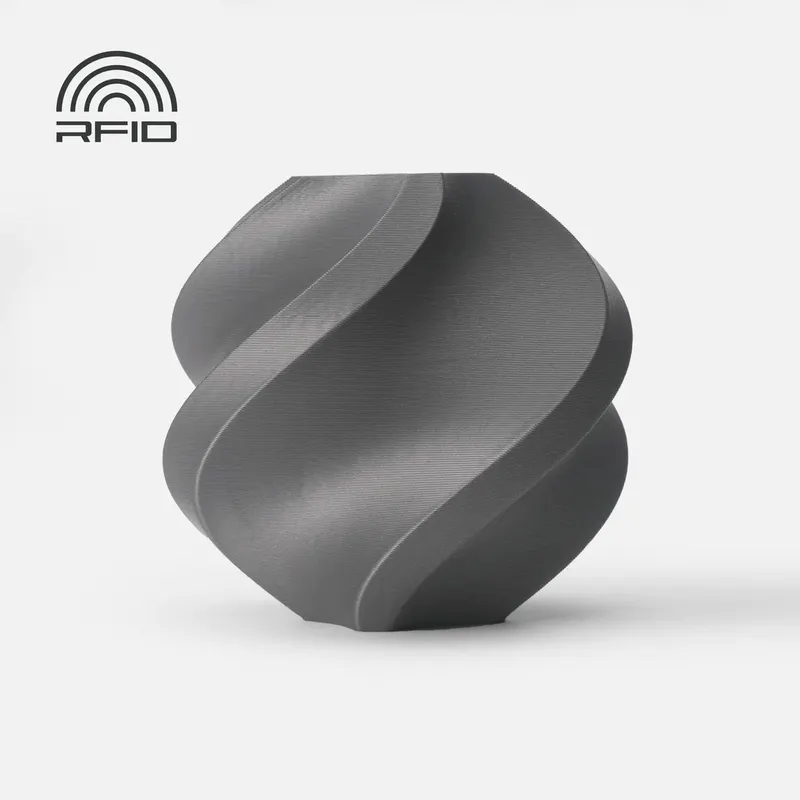
Bambu Lab ABS Silver
Silver 1.75 mm ABS filament for functional prototypes. Features heat resistance up to 87 °C, high impact strength, and an integrated RFID chip for automatic settings in the Bambu Lab AMS system. Optimal printing temperature is 220–260 °C with a bed heated to 80–110 °C.
599 Kč799 KčSALE -200 Kč
In stock
Product details
- SKU:
- 921072925237
- Brand:
- Bambu Lab
- Category:
- Filament
Product description
Bambu ABS Bambu ABS is a reliable material for 3D printing, known for its excellent stability, durability, and high impact resistance. In addition, this filament also features excellent thermal resistance, making it ideal for projects involving moderate temperatures. With its versatile properties, Bambu ABS filament is an excellent choice for a wide range of 3D printing applications.
Strong & Durable As one of the most commonly used filaments, Bambu ABS features excellent mechanical properties that make it stronger than standard PLA and PETG. It is ideal for creating functional parts, prototypes, and standard engineering components, ensuring long life and reliability.
Impressive Thermal Resistance Bambu ABS filament offers exceptional thermal resistance (Heat Deflection Temperature: 87 °C) together with commendable mechanical properties. This makes it an excellent choice for everyday functional parts requiring high temperature resistance.
RFID for intelligent printing
All printing parameters are embedded into the RFID, which can be read through our AMS (Automatic Material System). Load and print! No more tedious setup steps.
- The recommended temperature for the nozzle is usually in the range of 220 °C to 260 °C. Start at the lower end of this range and adjust the temperature based on your print results.
- For optimal adhesion, the recommended bed temperature is between 80 °C and 110 °C. Using higher bed temperatures can help prevent warping and improve first layer adhesion.
- Bambu ABS is best printed with minimal or no cooling. If cooling is necessary for specific parts of your model, ensure that the cooling is set to a low level (e.g., 20–30%).
- To ensure better adhesion to the bed, use Bambu liquid glue or another suitable type of 3D printing adhesive. Apply a thin layer to the bed before printing.


