
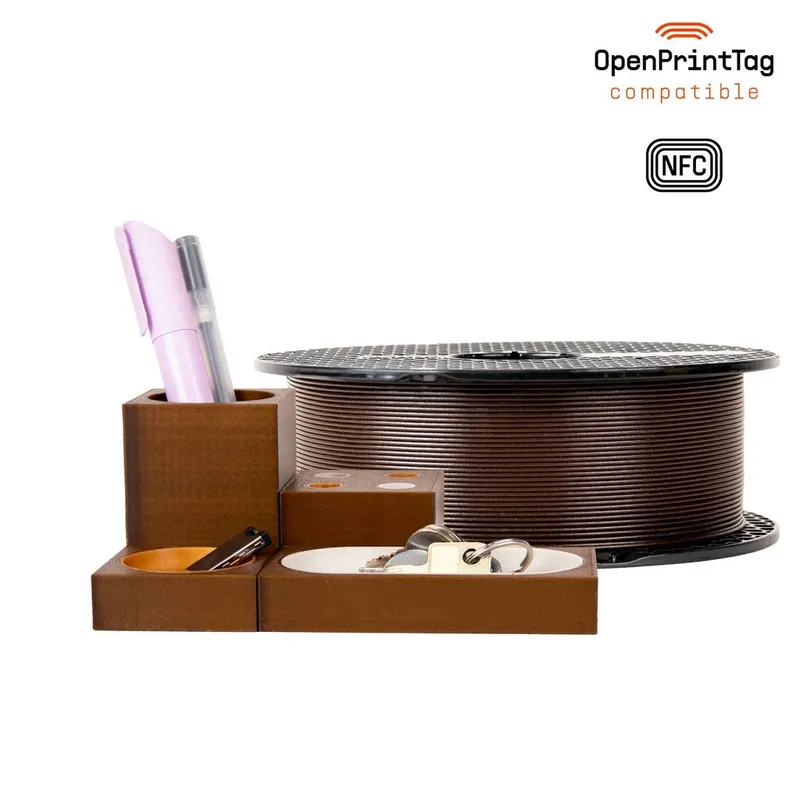
1 / 6
Prusament rPLA Algae Pigment 1kg (NFC)
Sustainable 3D filament made from 100% recycled PLA with natural red algae dye. Features 1.75 mm diameter with ±0.03 mm precision, low warping, and a unique organic brown finish. Compatible with FDM printers, ideal for design models and decorations up to 59 °C.
799 Kč
In stock
Product details
- SKU:
- 8594173675940
- Brand:
- Průša
- Category:
- PLA
Product description
Product Description
Prusament rPLA Algae Pigment 1kg is a recycled PLA filament from Prusa Research with natural pigments from organic waste (primarily from red algae). The base consists of 100% recycled PLA waste from the production of films and parts, which is reprocessed into a top-tier filament with an accuracy of ±0.03 mm. The Algae Pigment shade is a pleasant, muted brown color with a subtle natural texture. Due to the natural pigments, each production batch may have a slightly different tone, which gives the prints an authentic "organic" look. The filament has similar mechanical properties to standard PLA – it is stiff, dimensionally stable, and easy to print, but at the same time it is slightly more brittle and more hygroscopic (absorbs moisture). During printing, a more pronounced, but non-toxic scent of organic additives can be smelled.Main Advantages
- 100% recycled PLA material – made from industrial PLA waste, gentler on the environment.
- Natural pigments from organic waste – the color comes from red algae processing waste, without artificial dyes.
- High dimensional accuracy ±0.03 mm – stable material flow, less nozzle clogging, consistent layers.
- Very easy printing – low warping, great bed adhesion, suitable even for beginners.
- Beautiful natural brown shade – ideal for decorations, furniture models, props, and design elements.
- Suitable for small and very large prints – stability and low internal stress.
- Greener alternative to classic PLA – lower environmental impact thanks to material recycling and biobased pigments.
Recommended Use
- Interior decorations and accessories – vases, flower pot covers, organizers, decorative elements for home and office.
- Design and conceptual prototypes – furniture models, product design, visual mock-ups.
- Toys and visual parts – non-breakable parts without high mechanical stress.
- Props and cosplay – parts where appearance and ease of printing are important.
- Educational projects – schools, clubs, and makerspaces where emphasis is placed on sustainability.
Print Settings (guideline)
Nozzle Temperature
- 205 ± 10 °C (usually 200–215 °C depending on the printer and speed)
Bed Temperature
- 50 ± 10 °C (recommended range 40–60 °C)
Print Surface
- PEI smooth / textured / satin
- Glass, painter's tape, or glue stick are also possible – a clean surface is important.
Cooling
- 100% fan speed – the material behaves similarly to standard PLA.
Print Speed
- Medium to higher speeds – rPLA allows for faster printing than e.g. PETG, while maintaining very decent detail quality (recommended layer height up to 0.2 mm for fine details).
Material Properties
- Print difficulty: easy
- Stiffness: average to higher (typical for PLA)
- Brittleness: higher than standard PLA – less suitable for flexibly stressed parts
- Warping tendency: low
- Temperature resistance: approximately up to 59 °C
- Moisture absorption: slightly higher – dry storage is recommended, or drying before an important print
- Scent: medium, non-toxic, due to organic additives
- Abrasiveness: none – suitable for standard brass nozzles
Tips for Printing and Processing
- Surface preparation: keep it perfectly clean (ideally isopropyl alcohol). Grease or dust reduce adhesion.
- Storage: protect the filament from moisture – ideally in a sealable container with silica gel. If it starts printing with more "stringing" or worse surface quality, it should be dried.
- Post-processing: sanding is possible, but due to PLA's brittleness, it is more challenging. Wet sanding with fine sandpaper works best.
- Gluing: individual parts can be glued primarily with cyanoacrylate glue (superglue).
Why Choose Prusament rPLA Algae Pigment
If you are looking for a reliable PLA filament with a minimal ecological footprint, Prusament rPLA Algae Pigment is an excellent choice. It combines:- the assurance of quality and accuracy of the Prusament brand,
- recycled base material instead of newly produced PLA,
- and natural pigments from red algae pharmaceutical production waste.
Key Features:
- Premium recycled PLA filament from Prusa Research with natural pigments from red algae.
- 100% recycled PLA waste from industrial production – an ecological alternative to classic PLA.
- High dimensional accuracy ±0.03 mm for stable extrusion and high-quality print surfaces.
- Very easy printing, low warping, and reliable bed adhesion – suitable even for beginners.
- Pleasant natural brown Algae Pigment shade with a subtle texture, ideal for decorations and design models.
- Suitable for small details and large prints thanks to low internal stress and material stability.
- Natural pigments without artificial dyes – color may vary slightly between batches, giving prints a unique look.
- Non-toxic material with a typical but harmless scent of organic additives during printing.


